An expensive chair will not fix your back
Chair trials keep coming back with small or no effects on pain, which is awkward for a market built on the opposite claim. Two things about a chair do matter, and neither is the price.
The chair is the biggest single purchase most people make for a desk, and it is sold almost entirely on back pain. Lumbar support, ergonomic design, posture correction, twelve points of adjustment, a number of years of warranty that implies a number of years of relief.
Chairs have been trialled. The results are consistently underwhelming, and the reason turns out to be interesting rather than depressing.
What the trials found
Reviews of workplace interventions for back and neck pain have looked at chairs repeatedly. Effects on pain are typically small, often not statistically significant, and rarely maintained. Trials that swap people onto a specifically ergonomic chair and follow them for months struggle to show much against a decent ordinary chair.
The same pattern appears for lumbar rolls, kneeling chairs, saddle stools and ball chairs, each of which arrived with a strong mechanical rationale and left with a weak evidence base. Ball chairs in particular perform worse than they sound: no measurable benefit to spinal shape, more discomfort in several studies, and a nonzero chance of rolling away.
This is not the same as saying chairs do not matter. A chair that is the wrong size, or that cannot be adjusted at all, is genuinely capable of causing problems. The finding is narrower and more annoying: past a basic threshold, spending more does not buy less pain.
Why the mechanism argument fails
The pitch is that a chair holds your spine in a good position, and a good position prevents pain. Both halves are shakier than they sound.
Measured spinal posture is a poor predictor of who gets back pain. And a chair that holds you still is holding you still, which is the thing that actually correlates with how you feel at five o'clock. A chair that supports you perfectly in one position has, from your tissues' point of view, made the day worse rather than better.
The two things that do matter
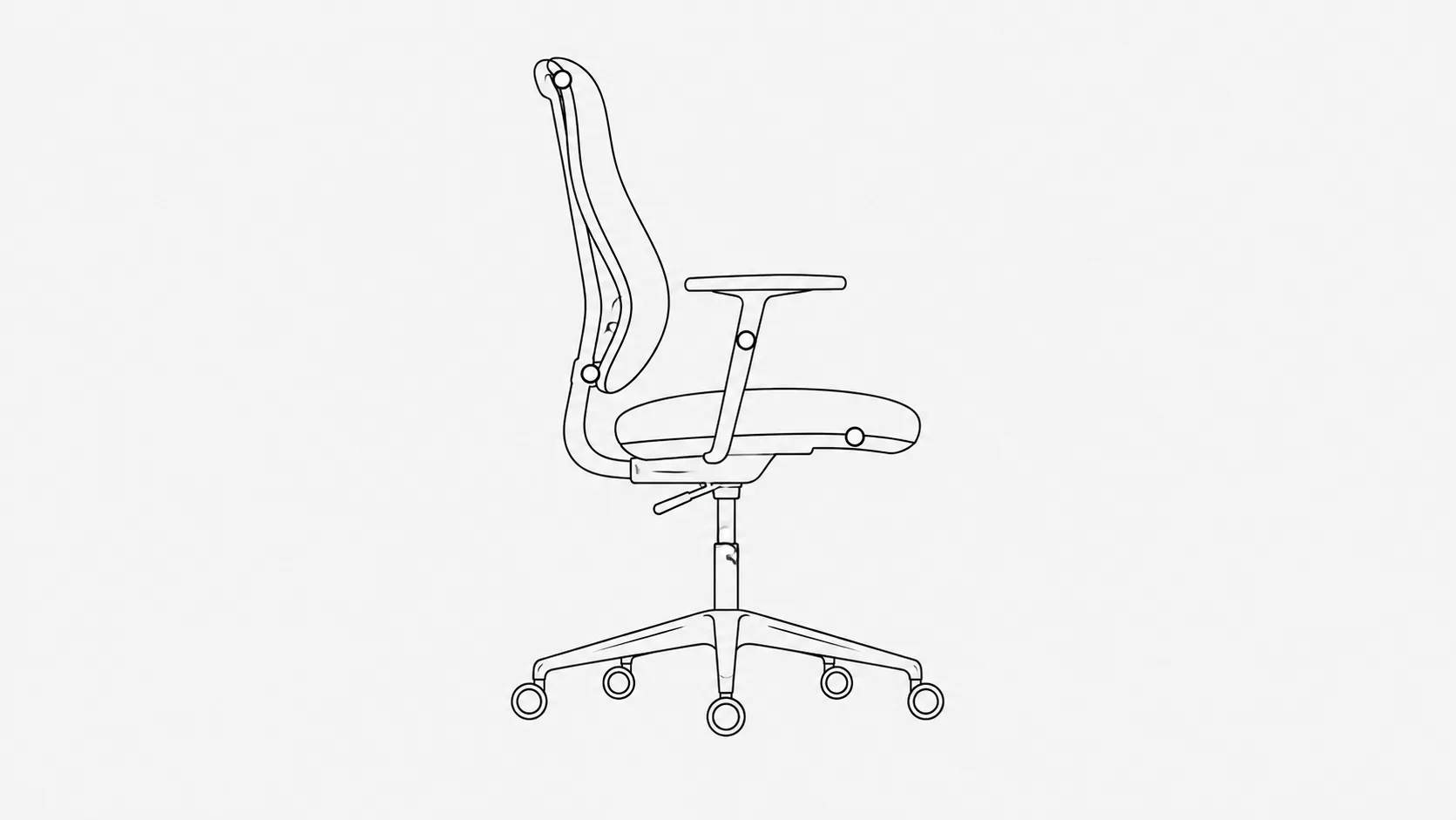
Fit, because a chair that does not match your body forces compensations all day. And adjustability, because it lets you change what you are doing, which is the only variable with a decent evidence base behind it.
- Seat height. Feet flat, thighs roughly level. Too high and you dangle, which loads the seat edge and the backs of your thighs.
- Seat depth. Two or three fingers between the seat edge and the back of your knee. This one causes more numb legs than any other measurement.
- Backrest that reclines and does not lock. Being able to lean back at 100 to 110 degrees for part of the day is more useful than any fixed lumbar shape.
- Armrests that get out of the way. Height-adjustable, and low enough that your shoulders are not shrugged. Bad armrests are worse than none.
- A seat that is not too wide. Rarely mentioned, common in cheap chairs, and it pushes armrests out of reach.
What you are actually paying for above a few hundred
| What the price buys | Whether it changes how your back feels |
|---|---|
| Durability, and a warranty long enough to matter | No, but it is a real thing to buy |
| Finer adjustment ranges, and adjustments that stay put | Sometimes, if you were at the edge of the range |
| Better foam and mesh that does not sag in two years | Comfort yes, pain no |
| Named ergonomic geometry and posture claims | No |
| Looking good in the corner of a video call | Also no, but be honest that it is part of it |
Durability is a legitimate reason to spend more. A chair that is still adjustable in ten years is better value than three chairs that sag. That is a different argument from the one on the box, and it is the one that survives scrutiny.
Setting up whatever chair you have
In this order, it takes five minutes
- Height first. Feet flat on the floor, thighs roughly horizontal. If the desk is now too high, raise the chair and add a footrest rather than dangling.
- Then depth. Two or three fingers behind the knee. If the seat does not slide, a cushion behind your back does the same job.
- Then the backrest. Set the lumbar bump at the small of your back, then unlock the recline so you can move.
- Then armrests. Low enough that your shoulders drop. If they force your elbows out or stop you getting close to the desk, take them off.
- Then stop adjusting and start changing position. Recline for a while, sit forward for a while, stand up every twenty to thirty minutes.
If you are buying
Sit in it first, for longer than a minute, ideally at a desk. Fit is individual and no review can tell you whether the seat is too deep for your legs. Buy used from a decent brand before buying new from a bad one, since the parts that matter are mechanical and outlast the upholstery.
And be suspicious of anything sold specifically as posture correction. That is the claim with the least support and the highest markup.
The short version
Chair trials do not show that better chairs mean less pain, because the position a chair holds you in was never the main variable. Get the height and the depth right, make sure it reclines, put the armrests where your shoulders can relax, and then spend your remaining attention on changing position rather than on finding the perfect one. Spend the money on a chair that will still adjust in ten years, not on one that promises to fix your spine.