Sitting is not the new smoking, and the slogan cost people years
The comparison is nonsense, but the panic it caused sent everyone shopping for chairs when the actual problem was that they stopped moving.
Sitting is the new smoking is one of the most successful health slogans of the last twenty years. It is also a bad comparison that the researcher usually credited with it has spent years trying to walk back.
Smoking multiplies your risk of lung cancer by something in the order of twenty times. Sitting a lot, after you account for how much people exercise and how much they weigh, does not come close to that for anything. The two belong in different conversations.
The slogan still did damage, in a specific way. It convinced a generation of desk workers that the danger was the chair, which is why so many people have spent money on furniture and still have a sore back at 5pm.
What the evidence on sitting and back pain actually says
This surprises people: sitting itself is a weak predictor of low back pain. Reviews looking for a relationship between hours seated and whether someone develops back pain keep finding it small or absent. Occupational sitting alone does not explain much.
What does show up more consistently is prolonged sitting without variation, particularly when combined with whole-body vibration or with a job that offers no chance to change position. The word doing the work in that sentence is not sitting. It is prolonged.
There is a separate and much stronger case that sedentary time is bad for cardiovascular and metabolic health. That case is real. It is just not the same as a claim about your back, and the two get merged constantly.
Why static loading hurts
Spinal discs have no meaningful blood supply of their own. They exchange fluid and nutrients by being loaded and unloaded, which is to say by you moving. Hold one position and that exchange slows to almost nothing.
At the same time the muscles holding you there are working at a low, unrelenting level. Low-effort sustained contraction fatigues in a way that hard, brief effort does not, because the same small fibres get recruited first and never released.
Neither of those cares much whether your posture was textbook. Both care enormously how long it lasted.
The best posture is your next posture
This is the most useful sentence in the field and it sounds like a slogan too, so it gets dismissed. It should not be.
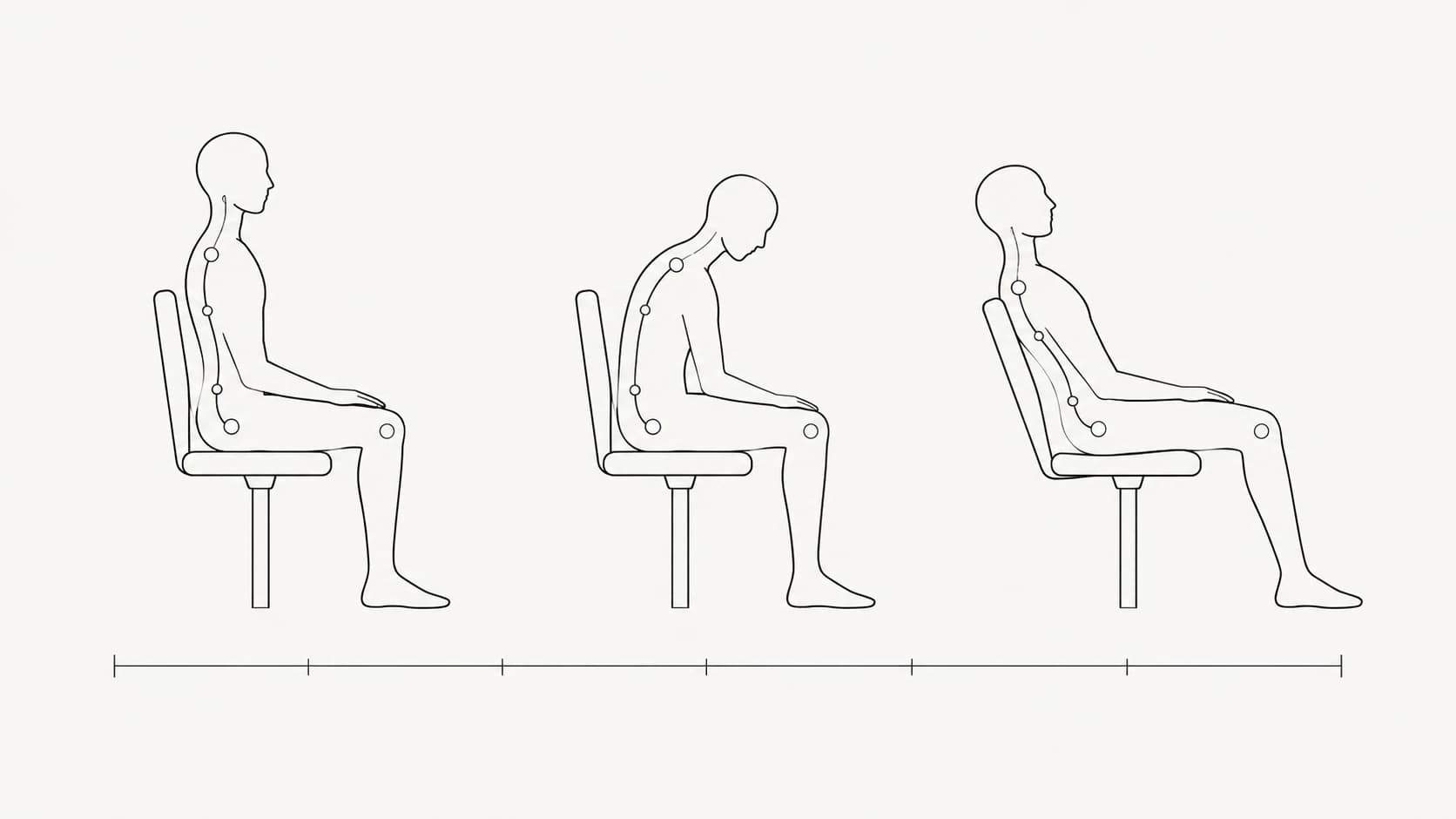
Slumping is not damaging your spine. Sitting up straight is not protecting it. Both become uncomfortable if you hold them long enough, and the discomfort is your nervous system asking for variation rather than reporting an injury. People who shift regularly between several ordinary positions do better than people who hold one excellent one.
What this looks like in practice
- Upright for a while, reclined for a while, perched forward for a while. Rotate through them rather than picking a winner.
- Reclining slightly is not cheating. Leaning back to around 100 to 110 degrees reduces the load on your lower back compared with bolt upright, as long as the backrest actually supports you.
- Cross your legs if you want to. It is asymmetric, which is fine for twenty minutes and not fine for four hours. Swap sides.
- Let yourself slump sometimes. It puts the load through different tissue, which is the point.
The chair question
Expensive chairs are not a scam. They make it easier to be comfortable in more positions, they adjust properly, and they last. What they do not do is prevent back pain, and studies comparing chair types have never found the effect people are paying for.
If you are choosing one, the features that matter are seat height, seat depth, and a backrest that supports your lower back where it actually curves. Everything above that is comfort and durability, which are worth money, just not the money you think you are spending on your spine.
Standing desks, honestly
A standing desk does not fix back pain either. Trials are mixed at best, and standing still all day produces its own problems, including leg and lower back discomfort that arrives faster than people expect.
What a sit-stand desk genuinely gives you is a second position that is easy to switch to. That is worth having, because the switching was the point all along. Aim for changing every half hour or so rather than for a heroic standing total.
What to actually do
- 1Get up every twenty to thirty minutes. Ten seconds is enough. This is the whole intervention and everything else is decoration.
- 2Change seated position several times an hour without trying to find the right one.
- 3Set your seat so your feet are supported and your hips sit slightly above your knees. If your feet dangle, you will slide forward within the hour.
- 4Walk at some point in the middle of the day. Not for your back specifically. For everything else that sitting does affect.
- 5Keep the strong stuff for outside work hours. General fitness raises the load your back tolerates, and it is the only item on this list with a large effect size.
When it is not just sitting
Back pain with numbness or weakness in a leg, pain that runs below the knee, any change in bladder or bowel control, or pain that is worse at night and not relieved by changing position, should be seen by a clinician rather than managed with a footrest. So should back pain following a fall.
The short version
The chair was never the villain and the slogan was never accurate. The thing that makes your back ache by evening is that you found a position at nine in the morning and stayed in it. Move more often, care less about which posture you move into, and spend the chair money on whatever you would actually enjoy.