A standing desk will not fix your back
The trials are in, and standing all day mostly swaps one set of aches for another. The desk is still worth having, but not for the reason it was sold to you.
Standing desks arrived on a wave of confident claims. Better posture, less back pain, more calories, sharper thinking, and an escape from sitting, which we had all just been told was the new smoking.
They have now been studied for long enough to say something useful. The desk is genuinely worth having. Almost none of the original claims survived intact, and the one thing it does well is not the thing on the box.
What the trials found
Workplace trials of sit-stand desks reliably show one thing: people given one sit less. That part works, often by an hour or more a day, and it holds up over months rather than collapsing after the novelty.
Beyond that it thins out quickly. Effects on back pain are small and inconsistent, with several trials finding no difference at all against a normal desk. Weight and metabolic markers barely move, because standing burns roughly 8 to 12 extra calories an hour, which is a small biscuit across a working week. Productivity results are mixed, and the studies reporting big gains tend to be the ones measuring self-reported productivity, which is not the same thing.
This is not a case of a product failing. It is a case of a product being sold on outcomes it was never going to move, when the outcome it does move is worth having on its own.
Standing all day is its own problem
The people who switch fully to standing usually discover this in the second week. Prolonged standing is not the absence of a load, it is a different load, and it has its own well-documented consequences.
- Low back discomfort. Standing still for long periods provokes back pain in a substantial minority of people who did not have it sitting. It shows up in laboratory studies within an hour.
- Legs and feet. Aching, swelling and, over years of occupational standing, a raised risk of varicose veins. Cashiers and machinists did not get an easy deal.
- Fatigue. Standing is more tiring, which is fine in the morning and less fine at four in the afternoon.
- Fidget loss. People often stand more rigidly than they sit, because there is no chair to shift around in. The static part is the problem, and it followed you up.
Standing is not the opposite of sitting. Standing still is a close cousin of sitting still, and stillness is the shared ingredient.
What the desk is actually good for
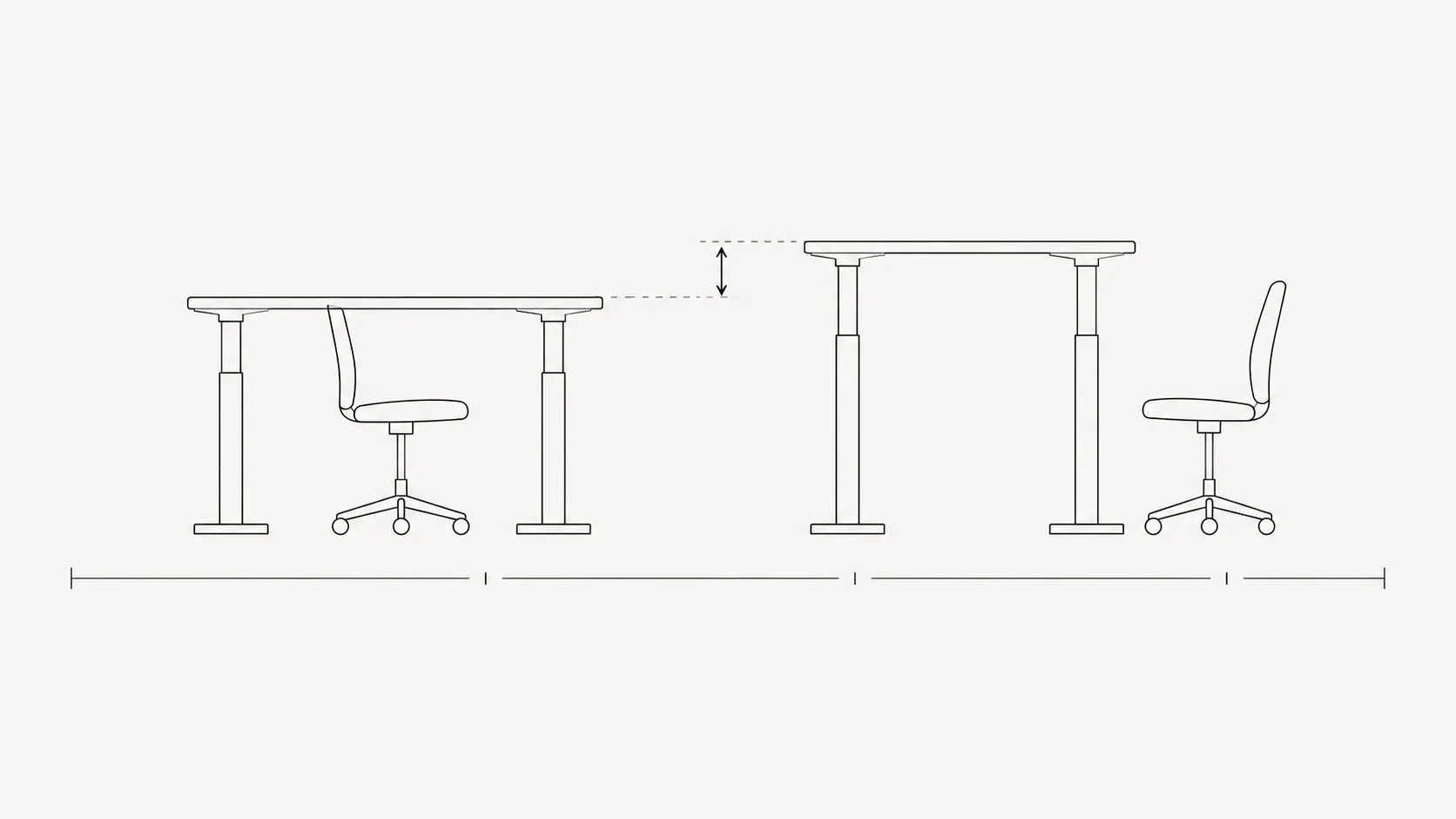
It removes the friction from changing position. That is the whole benefit, and it is a real one. Without a sit-stand desk, changing posture means standing up and abandoning your work. With one, it costs four seconds and you carry on typing.
Framed that way, the desk stops competing with your chair and starts doing something neither a chair nor a standing mat can do on its own. It makes the good behaviour cheap.
How long to stand
There is no established optimum, and anyone quoting one precisely is guessing. The ratios that appear in occupational guidance cluster around one part standing to two or three parts sitting, changed frequently rather than in long blocks.
| Pattern | How it usually goes |
|---|---|
| Standing all day | Abandoned within two weeks, or endured with sore feet and a new backache. |
| One long standing block, say 9 to 12 | Better, but the last hour is unpleasant and it becomes the block you skip. |
| Roughly 20 to 30 minutes standing per hour, split up | The pattern most people actually keep, and the one closest to the guidance. |
| Standing only when you remember | Two changes on a good day, none on a busy one. This is the default and it is why reminders exist. |
The last row is the honest one. Intention is not the constraint. Nobody forgets to stand because they do not believe in it. They forget because they were concentrating, which is the whole point of a working day.
Setting it up so standing does not hurt
Worth getting right before you blame the desk
- Set the height with your elbows, not your hands. Elbows at roughly ninety degrees, shoulders down. Most people set a standing desk too high and end up shrugging all morning.
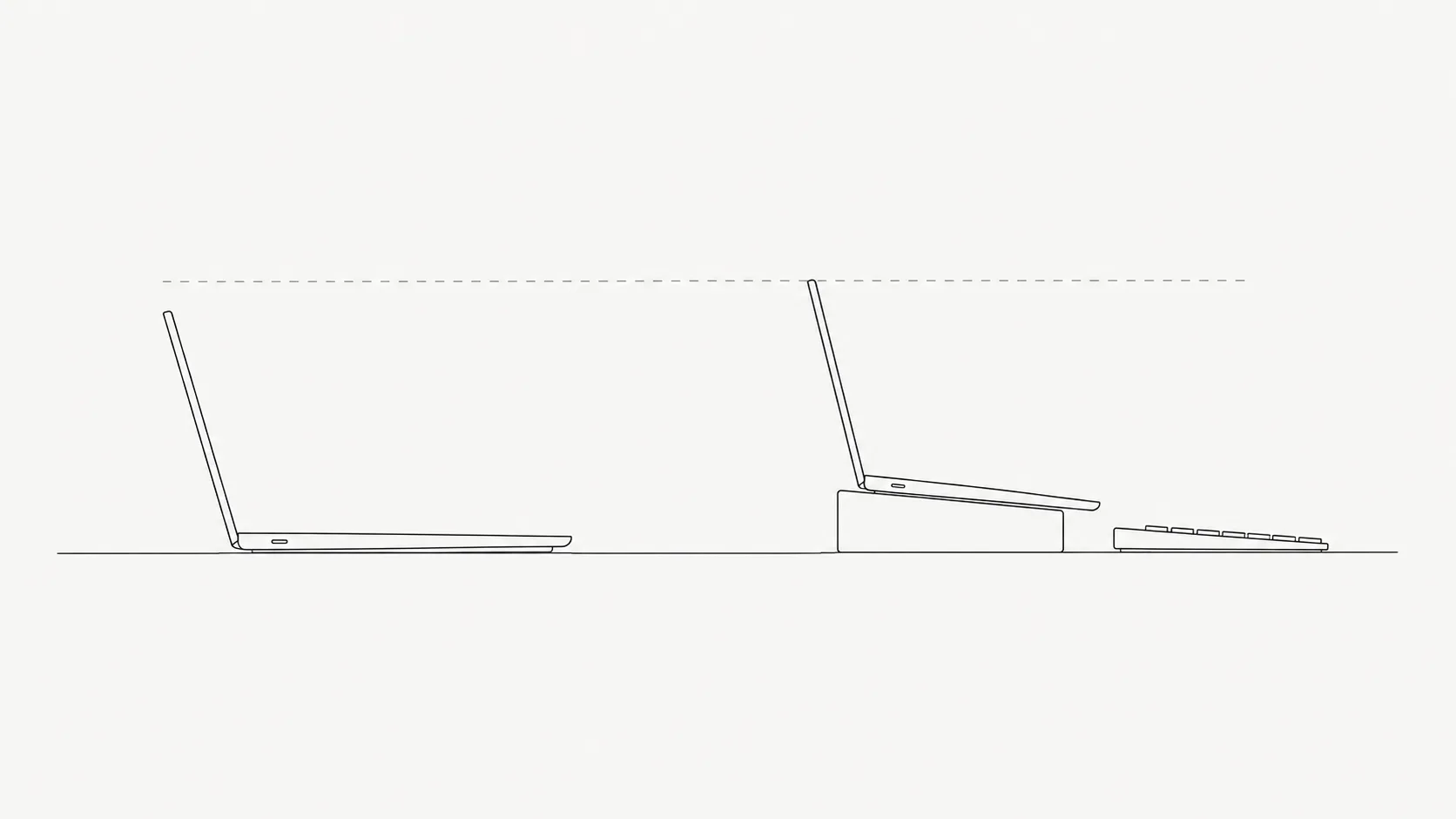
- Raise the screen too. The monitor has to come up with the desk, or you have simply invented a new way to look down.
- Stand on something soft. An anti-fatigue mat is the cheapest part of this and the one that decides whether you last an hour.
- Take your shoes off, or wear supportive ones. Standing in hard flat shoes on a hard floor is where most foot complaints come from.
- Shift your weight deliberately. Rest one foot on a low rail or box and swap sides. Rigid standing is the version that hurts.
If you are not buying one
Most of the benefit is available without spending anything, because the active ingredient was never the furniture.
Take calls standing. Put the printer, the kettle and your water somewhere inconvenient. Stand up when someone comes to talk to you. Get up every twenty to thirty minutes even for ten seconds. None of that requires a motor, and all of it does the same job the desk does, with more friction and no invoice.
The short version
A sit-stand desk does not correct your posture, will not meaningfully change your weight, and is not reliable treatment for back pain. What it does is make changing position almost free, and changing position is the thing that actually predicts how you feel at five o'clock. Buy it for that, use it in short alternating stretches, and do not stand all day. Standing still is just sitting still with worse feet.