Your shoulders are not tight, they are still switched on
The muscle across the top of your shoulder recruits the same small fibres first every time and releases them last. At a desk that means a few of them never get a break all day.
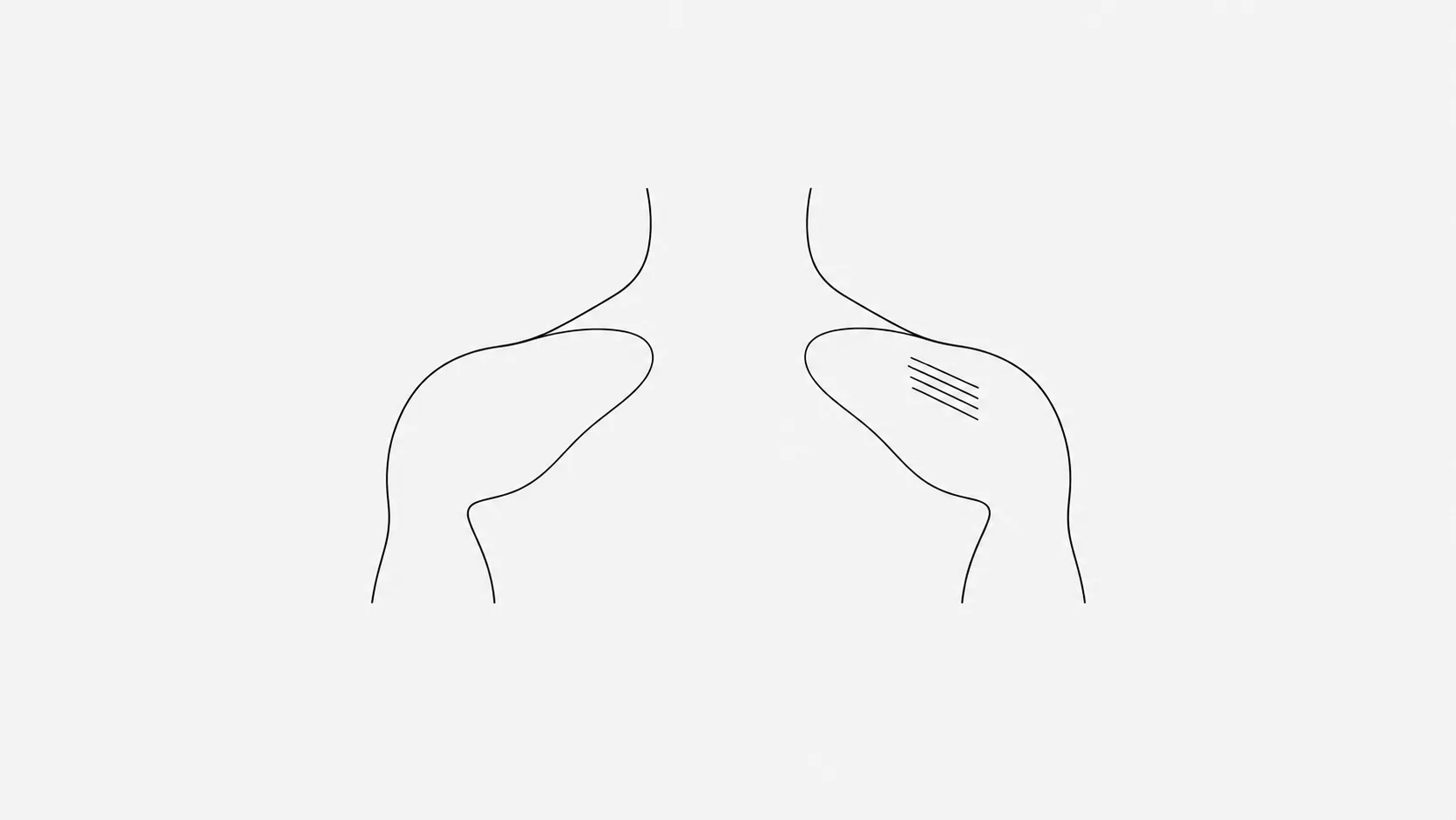
By four in the afternoon there is a band across the top of your shoulders that feels like it has been clenched since lunch. You roll them, you press a thumb into it, it feels wonderful for about ninety seconds, and then it is back exactly where it was.
The usual explanation is that the muscle is tight and needs lengthening. That is not what is happening, and the real version explains why the stretching never holds.
Tight is the wrong word
A muscle that is short and a muscle that is working are different states, and from the inside they feel similar. Your upper trapezius at a desk is not shortened. It is contracting, at a very low level, more or less continuously.
Low level is the important part. This is not effort you would notice if someone asked. It sits somewhere around two to five percent of what the muscle can produce, which is why it never registers as exertion and why the ache seems to arrive without you having done anything to earn it.
First on, last off
Motor units inside a muscle are recruited in order, smallest first. Ask for a small amount of force and the same small, fatigue-resistant units switch on. Ask for more and larger ones join in. Relax, and the large ones drop out first and the small ones last.
That ordering is harmless when force varies through the day. At a desk it does not vary. You hold your arms forward for an hour, and the same handful of motor units that switched on at the start is still on at the end, while the rest of the muscle sits idle and rested around them.
The researcher who described this called them Cinderella fibres, because they are first to work and last to leave. The name is faintly ridiculous and it stuck, because the picture is right: the muscle as a whole is barely working, and a small part of it has been working all day without a pause.
Muscle biopsies from people with long-standing trapezius pain fit that picture. The abnormalities show up in exactly those slow, always-on fibres, as disturbed mitochondria in cells that never got to stop.
The measurement that predicts who gets it
Put an electrode on the upper trapezius during ordinary computer work and you can count the moments where activity drops to genuine rest, even for a fraction of a second. They are called EMG gaps.
People who go on to develop neck and shoulder complaints have fewer of them. Not higher muscle activity overall, which is the intuitive answer and is mostly not what separates the groups. Fewer pauses.
This is the same finding the rest of desk research keeps producing in different clothes. The problem is continuity rather than intensity, and it is the reason the advice always ends up being about interrupting things rather than about arranging them.
Why the mouse side is usually worse
Ask anyone with desk shoulder pain which side it is on and most will answer the mouse side without pausing. Reaching for a mouse means holding an arm forward and slightly out, unsupported, for hours, and the muscle that holds a limb away from the body at low effort indefinitely is the one across the top of your shoulder.
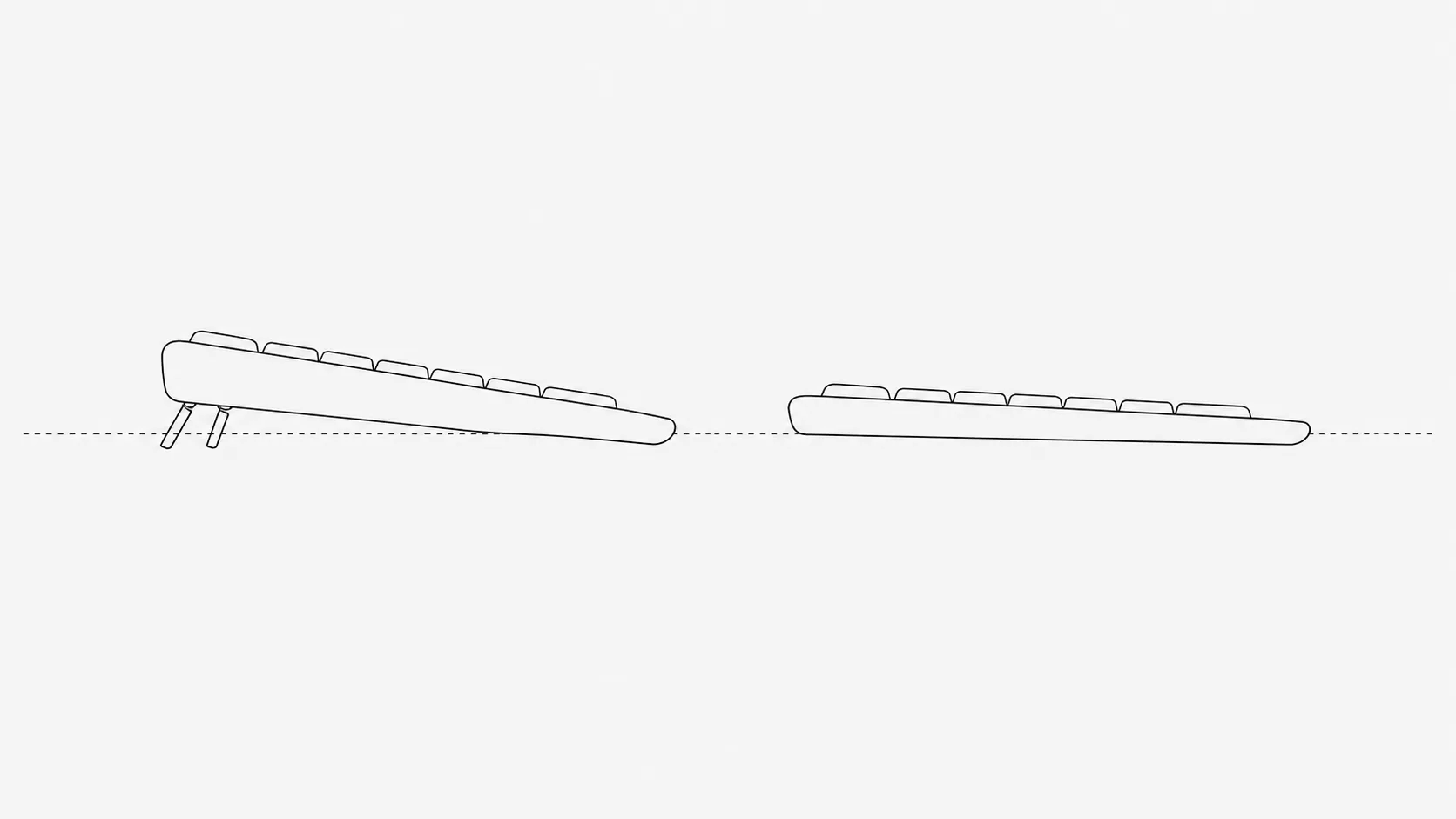
It gets worse the further out the mouse sits. A full-size keyboard with a number pad pushes your mouse hand another ten centimetres away for the entire working day, which is an unusually large change for something almost nobody considers when buying one.
Stretching, honestly
Stretching the upper trapezius feels excellent. Ear towards shoulder, gentle pull, immediate relief. The relief is real, it is mostly a change in how the stretch is perceived rather than a change in the muscle, and it fades within the hour.
That is not an argument for skipping it. It is an argument against expecting it to be the treatment, and it explains the loop where people stretch the same spot every afternoon for years and never get further than the afternoon.
The knot, and the ninety seconds
You can feel a firm spot in there, and pressing on it produces relief out of all proportion to how long the relief lasts. The standard explanation is a trigger point, a small band of muscle stuck in contraction. That model is less solid than its popularity suggests: examiners agree poorly with each other about where the points are, and the taut band has never been imaged convincingly.
What is not in question is that pressure on the area feels good. A thumb, a spiky ball and a percussion gun are all doing roughly the same job for roughly the same duration, and reviews of percussive therapy find short-lived changes in range of movement and soreness with nothing that persists. Treat all of it the way you would treat the stretch: pleasant, genuinely useful for getting through an afternoon, and not a treatment for a muscle that is being asked to stay on for eight hours.
What has actually worked in trials
The most convincing office-worker results have come from strength training, which is the opposite of what the tightness story would suggest. Programmes of specific, progressive shoulder work, often only a few exercises for around ten minutes several times a week, have produced clinically meaningful reductions in neck and shoulder pain in people with long-standing trapezius complaints.
In several of those trials it beat general fitness training and it beat ergonomic adjustment. The effect seems to come from loading the muscle properly on purpose, rather than leaving it to idle at three percent for eight hours and calling that a day's work.
The version that fits into a working week
- Lateral raises, light. Two or three sets, slow, stopping well short of failure. The weight matters less than doing it at all.
- Shrugs with a pause at the top. The point is taking the muscle through a range under load, not lifting something heavy.
- Rows, any variation. Band, dumbbell, cable. This is the one most people skip and most desk workers need.
- Three times a week, for months. The trials that worked ran ten weeks or longer. Two good weeks will not show you anything.
The setup changes worth making
- Bring the mouse in. A keyboard without a number pad moves it closer for free, and that is the largest single geometric change available to most people.
- Use the armrests, or take them off. Supporting the forearm measurably reduces the load on the shoulder. Armrests at the wrong height do the reverse.
- Stop pinning the phone to your ear with your shoulder. That is a short burst of high load on exactly the wrong tissue, and headphones cost less than physiotherapy.
- Lower the desk or raise the chair. Typing with your shoulders slightly lifted is a shrug you are holding for eight hours.
- Break the hour. Any genuine pause where your arms come down gives those fibres the rest they have not had since you sat down.
Pain that runs down the arm, numbness or pins and needles in the hand, weakness, or a shoulder that will not lift through its full range is a different question. So is pain that wakes you at night. Those are worth a clinician rather than another desk adjustment.
The short version
The band across your shoulders is not short, it is busy. A small set of fibres in the upper trapezius switches on when you sit down and never switches off, and the people who develop pain are the ones whose muscle gets the fewest real pauses. Stretching buys you an hour. Strength work over a couple of months is what has moved the numbers in trials. And bringing the mouse closer, getting your forearms supported and letting your arms drop regularly will do more than any amount of rolling your shoulders backwards.