Your 3pm coffee is still in you at bedtime
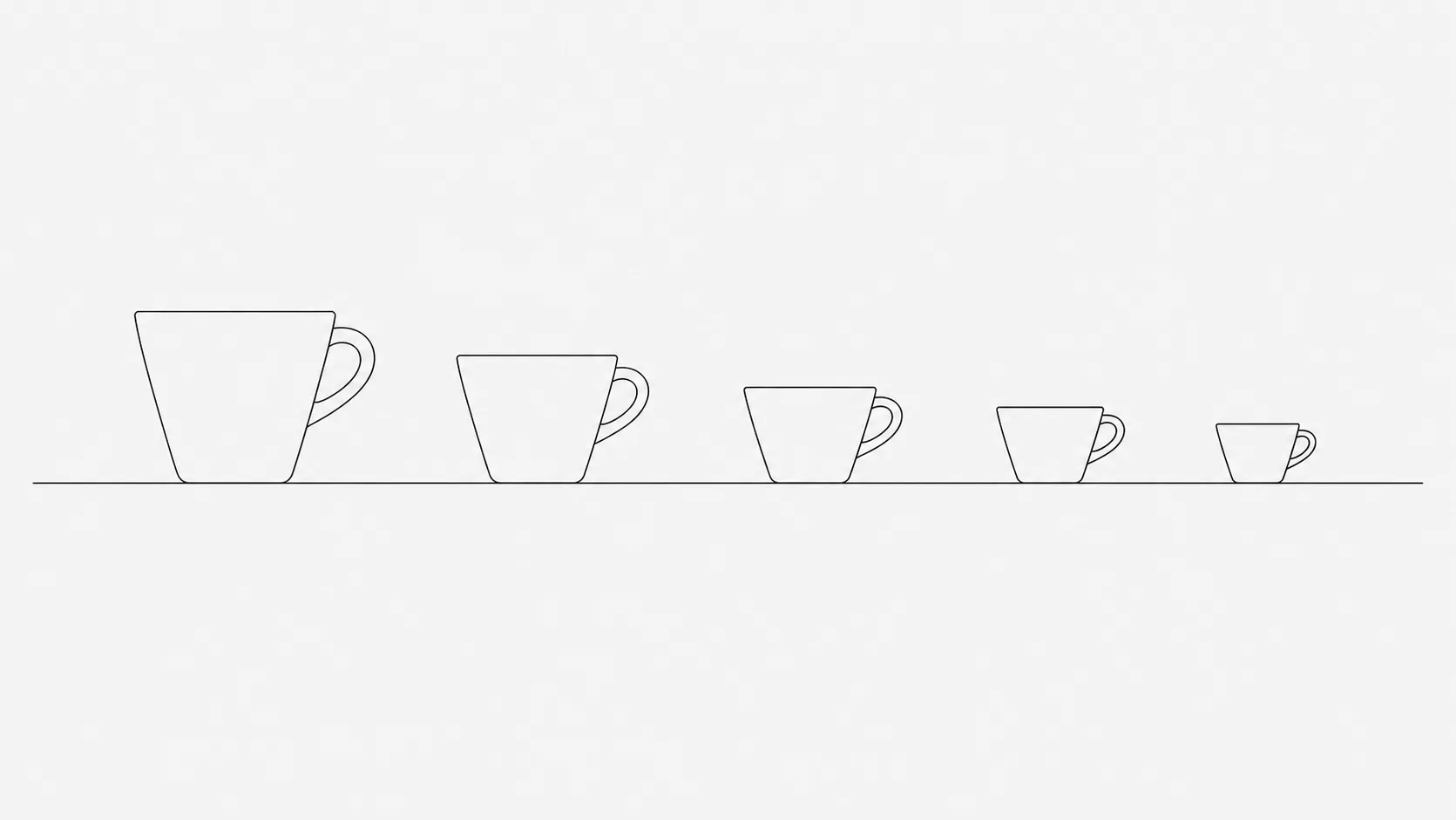
Caffeine has a half-life of about five hours, so a mid-afternoon cup is a quarter of a cup at one in the morning. It does not produce alertness either. It hides the absence of it.
Coffee is the most widely used drug in the world and the only one most people take without any plan at all. The default plan is to drink it when tired, which is close to the worst option available, and the reason is in how it works.
Caffeine does not make energy
While you are awake, a molecule called adenosine accumulates in the brain. The longer you have been up, the more of it there is, and the sleepier you feel. It is one half of what decides when you sleep.
Caffeine is shaped enough like adenosine to sit in its receptors without activating them. It does not remove adenosine, and it does not slow the rate at which it builds. It blocks the signal.
So the pressure keeps rising the entire time, you have simply stopped being told about it. When the caffeine clears, all of it is still there, plus everything that accumulated in the meantime. That is the crash, and calling it a crash flatters it. It is an invoice.
The half-life is about five hours
Caffeine is cleared by a liver enzyme at a rate that varies enormously between people. Five hours is the usual average, with a normal range of roughly three to seven. Smoking roughly halves it. Pregnancy and some oral contraceptives roughly double it. A common variant in the enzyme itself puts people at one end or the other permanently.
Take the average and run the arithmetic on one mug of filter coffee, around 100 milligrams, drunk at three in the afternoon.
| Time | Roughly what is left |
|---|---|
| 3pm, the cup | 100 mg |
| 8pm | 50 mg |
| 1am | 25 mg |
| 6am | 12 mg |
A quarter of a coffee is still circulating at one in the morning. That is not a figure of speech, it is the same pharmacology as any other drug, and the people who insist caffeine does not affect their sleep are usually right about the part they can observe.
Falling asleep is not the part it ruins
The most quoted experiment on this gave people 400 milligrams of caffeine at three different times: immediately before bed, three hours before, and six hours before. All three measurably disrupted sleep against placebo, including the dose taken a full six hours ahead of bedtime.
The people taking it largely did not notice. Their own ratings of how they had slept did not match what the monitors recorded, which is the finding that matters most here, because the entire defence of the afternoon coffee rests on not noticing anything.
What it costs is depth rather than onset. Less deep sleep, more fragmentation, more time awake in the night that never gets remembered in the morning. You wake up feeling like you slept badly for no reason, and the reason was eleven hours earlier.
Tolerance turns it into maintenance
Receptors adapt. Regular caffeine leads the brain to produce more adenosine receptors, so the same dose blocks a smaller share of them, so baseline alertness without caffeine is now lower than it used to be.
The practical consequence is that most habitual drinkers are not being lifted above normal. They are climbing back to normal out of a withdrawal that started overnight. The first cup feels dramatic because the deficit it corrects is real, not because the drug is doing anything remarkable.
The honest test is a week without it. The first two or three days are genuinely unpleasant, including a distinctive headache that peaks about a day or two in. After that most people are no more tired than they were at their caffeinated baseline, which is either liberating or infuriating depending on how much you like coffee.
The ninety minute rule is a story, not a finding
The popular advice to wait ninety minutes after waking before the first coffee rests on the fact that cortisol peaks shortly after you wake, and on the claim that caffeine landing on top of that peak is wasted and accelerates tolerance.
The cortisol part is true. The rest is an inference that nobody has properly tested. There is no good trial showing that delaying the first cup improves alertness later in the day or slows tolerance, and it gets repeated with a confidence the evidence does not support.
It is not harmful advice, and if the routine suits you there is no reason to stop. It is worth knowing that it is a plausible mechanism rather than a measured result, because it is usually presented as though somebody checked.
More stops helping quite early
The alertness benefit flattens out around three milligrams per kilogram of body weight, which for most adults is roughly 200 milligrams, or two ordinary coffees. Past that you get more of the side effects and very little more of the effect: jitter, a faster heart, and in a lot of people an anxiety that gets blamed on work.
Regulators generally put the ceiling for healthy adults around 400 milligrams a day. Most people who feel bad from caffeine are nowhere near that. They are drinking a reasonable amount at an unreasonable hour.
How much is actually in things
Counting is impossible without numbers, and the numbers are less intuitive than most people expect. Brew strength swings these ranges around considerably, so treat them as the middle of a distribution rather than a measurement.
| Drink | Roughly |
|---|---|
| Filter coffee, a mug | 95 to 165 mg |
| Instant coffee, a mug | 60 to 80 mg |
| Espresso, one shot | 60 to 75 mg |
| Black tea, a mug | 40 to 70 mg |
| Energy drink, a small can | 75 to 80 mg |
| Green tea, a mug | 25 to 45 mg |
| Cola, a can | 30 to 40 mg |
| Decaf coffee, a mug | 2 to 15 mg |
The line that catches people out is espresso. A single shot carries less caffeine than a mug of filter coffee, because the mug is four times the volume. The other one is decaf, which is decaffeinated rather than caffeine free, and which adds up if it is what you drink all evening.
What to do with all this
Timing beats quantity
- Set a cut-off rather than a limit. Eight hours before bed, and earlier if caffeine hits you hard. For a midnight bedtime that is four in the afternoon.
- Do not spend it on the first fog of the morning. That is sleep inertia and it clears by itself in twenty minutes, so the cup gets used on a problem that was already solving itself.
- Put one dose in front of the afternoon dip, not in it. The mid-afternoon low is a real circadian event, and caffeine taken before it works better than caffeine taken during it.
- Try the coffee nap once. Caffeine takes around twenty minutes to act, so a coffee followed immediately by a twenty minute nap has you waking as it arrives. It has held up in driver sleepiness studies and it feels like cheating.
- Count everything. Tea, cola, energy drinks, pre-workout, dark chocolate, and the decaf that is not actually caffeine free.
Palpitations, tremor, chest pain or anxiety that arrives with caffeine is a reason to cut down rather than push through, and worth mentioning to a doctor if it keeps happening. Recommended limits in pregnancy are lower, usually around 200 milligrams a day. Caffeine also interacts with a number of medications, which a pharmacist can check in about a minute.
The short version
Caffeine blocks the signal that says you are tired and does nothing about the tiredness, so the bill arrives later with interest on it. Its half-life of around five hours puts a quarter of your three o'clock coffee in your blood at one in the morning, and the experiment that dosed people six hours before bed still measured worse sleep that they could not detect themselves. Pick a cut-off, keep it to about two cups, spend one of them just ahead of the afternoon dip, and stop expecting the drug to produce something it only ever borrowed.