With ADHD the hard part is not focusing. It is starting.
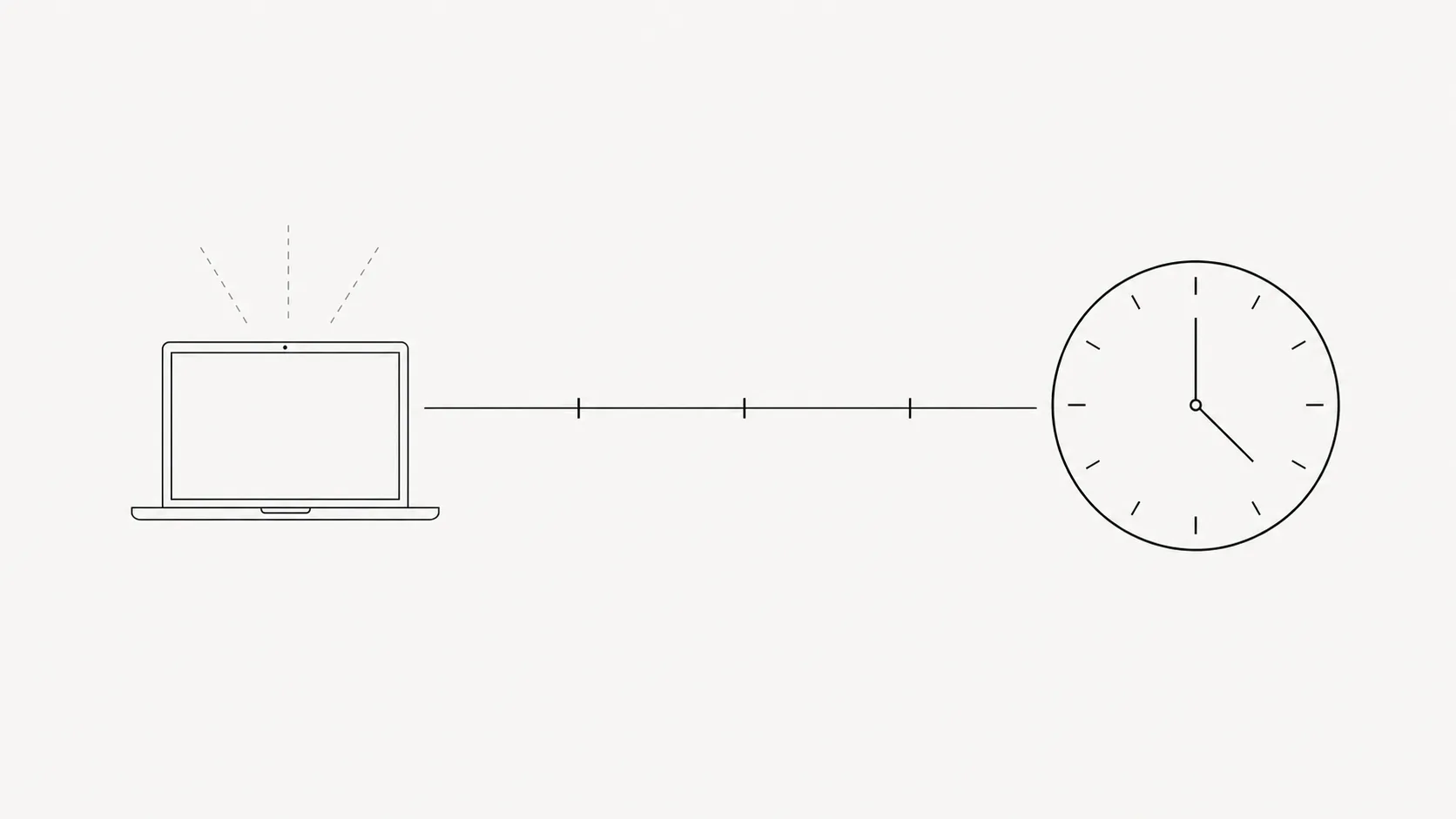
The advice usually aimed at ADHD assumes the problem is attention running out. Most days the problem is a task that will not begin, and time that does not seem to pass.

The standard picture of ADHD is someone who cannot concentrate. Anyone who has it knows that picture is wrong, because they can also name the four hours last Tuesday that vanished into something genuinely absorbing, with no food, no water and no sense that time was passing.
The difficulty is not the amount of attention. It is the control over where it goes and when it starts, plus a sense of time that does not run at the same rate as everyone else's. Those are different problems, and they need different tools.
This is a set of working strategies, not medical advice. If you suspect ADHD, an assessment is worth more than any article, and treatment decisions belong with a clinician.
Starting is the bottleneck
Most days are not lost to distraction halfway through. They are lost before the first minute, to a task that sits there fully understood, entirely doable, and somehow impossible to begin. Then the guilt about not starting becomes its own obstacle, and by the afternoon the thing has grown teeth.
What works is making the first action so small it does not qualify as the task.
- Name a physical first move, not a goal. Not write the proposal. Open the document and type the client name. Not answer emails. Open the inbox and read the top one.
- Sign a five-minute contract. Five minutes, then you are allowed to stop. You usually will not, but the exit has to be genuine or your brain stops believing you.
- Leave it unfinished on purpose. Stop mid-sentence at the end of a session. Returning to a half-written line is far easier than returning to a blank one.
- Reduce the decisions. Choosing which task is a separate act of will from doing it. Pick tomorrow's first task before you finish today.
Body doubling, and why it is not silly
Working in the presence of another person, in the room or on a silent video call, makes starting dramatically easier for a lot of people with ADHD. It gets dismissed as a crutch, which misses that it is doing something specific: it turns an abstract intention into an observed commitment, and it removes the ambiguity about when the working starts.
It does not require anyone to help you, or even to be doing the same kind of work. A flatmate at the other end of the table counts. A scheduled call where you both say what you are doing and then go quiet counts.
Time blindness needs an external clock
Ten minutes and fifty minutes feel similar from the inside. That is not carelessness, and it is why plans built on estimating durations keep failing. The fix is to stop asking yourself to sense time and put it somewhere you can see.
- A visible running timer beats a plan. Something already counting, in your field of view, not a number you check by opening an app.
- Analog beats digital. A shrinking wedge of colour reads as an amount. A digital readout reads as a number, and numbers need interpreting.
- Alarms for endings, not beginnings. You will start eventually. You will not stop.
- Timestamp the day loosely. Three anchors, morning, after lunch, end of day, is enough structure without a schedule you will abandon by Wednesday.
Get it out of your head
Holding a list in working memory while also doing the work is expensive, and dropping one item quietly is what makes people feel unreliable. One capture place, always the same one, and every entry written as a verb you could act on without thinking.
Reply to Sam is a task. Sam thing is not, and by Thursday it will cost more to decode than to have written properly.
The mid-task escape
The pull away from a task is rarely towards nothing. It is towards something more novel, and the moment it usually strikes is right when the work becomes tedious or slightly difficult, which is also the moment when leaving feels most reasonable.
- Phone in another room. Face down on the desk is not the same. The reach has to be inconvenient.
- One screen for the task. Everything else closed, not minimised.
- Keep a scrap sheet for intrusions. Every idea that arrives mid-task goes on it in four words. That satisfies the urge to act on it without leaving.
- Notice the pattern of the exit. Almost everyone has one specific site or app that is the door. Block that one and the other twenty stop mattering.
Hyperfocus is not a superpower
It gets sold as the upside, and sometimes it is. But the version that happens on a random Tuesday, on the wrong task, is expensive. Six hours disappear, you have not eaten or drunk anything, you are seized into one position, and the thing you actually owed someone is still not done.
The defining feature is that you cannot notice it from the inside. Which means every strategy relying on you catching yourself is void, and the only thing that works is an interruption from outside that arrives whether you feel like being interrupted or not.
Automatic beats intentional, every time
- Reminders that fire on a schedule rather than when you decide you need one.
- An alert that responds to your body rather than the clock, because you have been slumped for forty minutes without knowing it.
- Water and food on a timer during long sessions, not by appetite. Appetite is one of the first signals hyperfocus turns off.
- Something that interrupts, not something that logs. A report at the end of the day tells you what you already regret.
Movement and noise
Physical activity has a reasonably good evidence base for a short-term lift in attention, and the effect is most usable right before something demanding. A ten-minute walk before a task you have been avoiding is a legitimate tactic rather than procrastination, provided the walk has an end.
Fidgeting is worth defending too. Moving hands, a foot bouncing, standing for calls. It is often the thing keeping the rest of you at the desk, and suppressing it usually costs more than it gains.
On sound, there is a repeated research finding that moderate background noise helps people with weaker baseline attention, including in studies of children with ADHD, while slightly hindering people who already concentrate easily. That is far from settled, but it does mean that if noise helps you and not your colleague, neither of you is imagining it. Which colour to pick is a separate question.
Meetings and other people
Everything above is about working alone, which is the easy half. The part that damages reputations is the interface with other people, and it usually fails in the same three places.
Nothing said in a meeting survives it
Listening and recording at the same time is a working-memory problem, and holding a commitment in your head until the call ends does not work reliably. Type actions as they are agreed, in four words, in the same place every time. If that is hard to do while talking, say out loud that you are noting it down. Nobody has ever objected to that.
Agreeing to things at the speed they are asked
Yes arrives before the estimate does, partly because time is hard to judge and partly because refusing in the moment is uncomfortable. A single sentence fixes most of it: I will check what is already on this week and confirm this afternoon. It buys the ten minutes you need to work out whether the answer is actually yes, and it makes you look considered rather than reluctant.
Going quiet when something has slipped
This is the expensive one. A task that is late produces avoidance, avoidance produces silence, and silence is what colleagues actually notice and hold against you. Almost nobody is annoyed by a delay they were told about early. Nearly everybody is annoyed by finding out on the deadline.
So make the update automatic rather than conditional on how the work is going. A short message on a fixed day, whether or not there is good news, costs a minute and removes the single behaviour most likely to be read as unreliability.
Be less expensive to yourself
The lost time on a bad day is rarely the distraction itself. It is the hour afterwards spent on the fact of having been distracted. That spiral is optional in a way the original lapse was not, and cutting it short is probably the highest-value habit on this page.
A missed morning is a missed morning. The afternoon is unrelated, and treating it as already ruined is a choice that costs another four hours.
TryWorkWell is not an ADHD tool and it would be dishonest to sell it as one. But the thing it does happens to be the thing that works here. It notices what you cannot notice from inside a session, and it tells you at the moment it matters rather than in a summary you read later.