Blue light is not what is keeping you awake
Blue-blocking glasses have been tested properly, and the results are underwhelming. The thing that actually costs you sleep after an evening at your desk is not a colour.
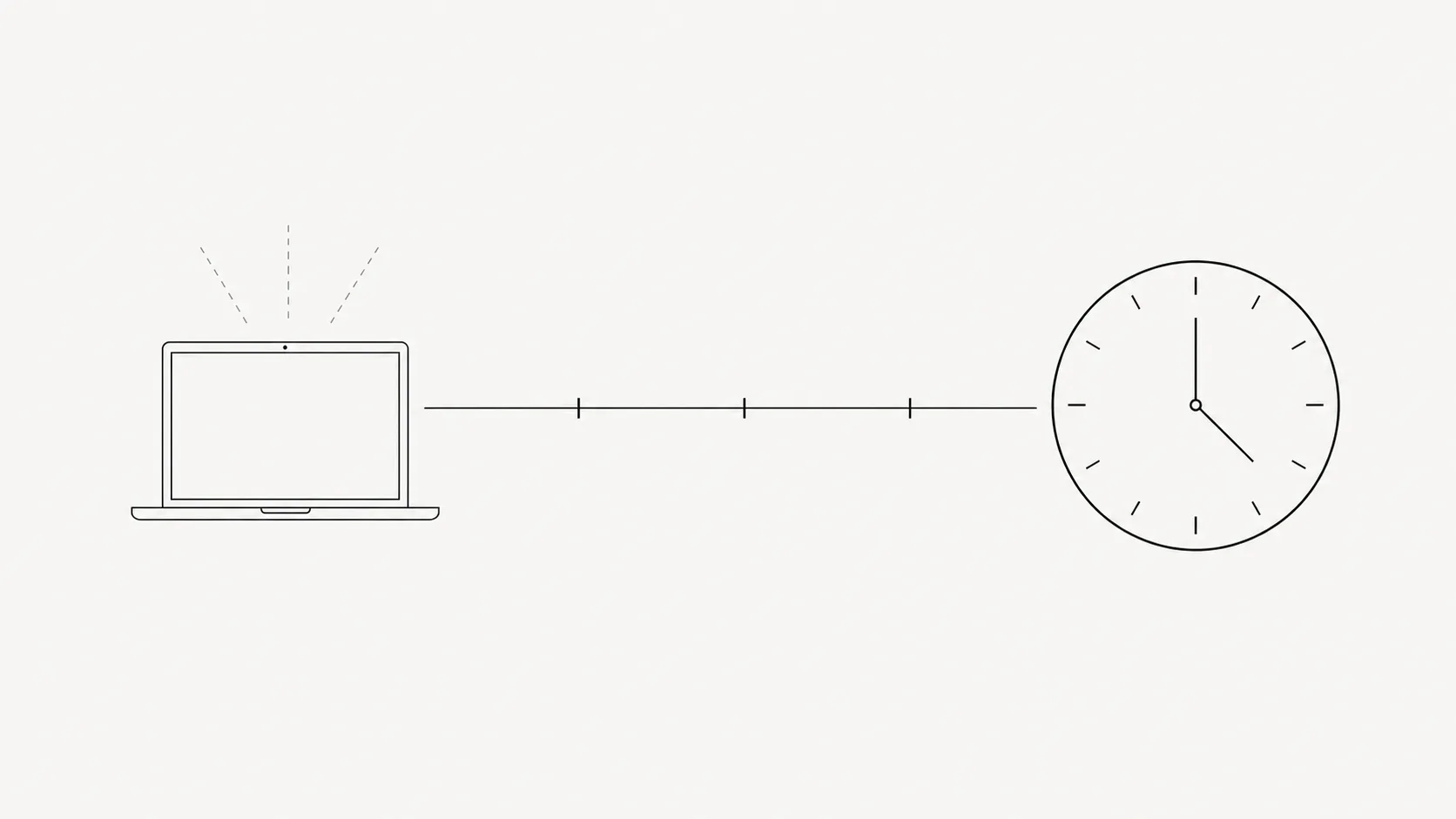
The advice is everywhere and it is pleasantly simple. Screens emit blue light, blue light suppresses melatonin, melatonin makes you sleepy, therefore wear amber glasses after eight and you will sleep. Phone makers built a night mode on the strength of it. An entire eyewear category exists because of it.
Each link in that chain is real. The chain as a whole does not hold, and the reason matters, because people who buy the glasses often stop looking for the thing that is genuinely wrecking their sleep.
The part that is true
Light does set your body clock, and short-wavelength light does it most efficiently. There is a receptor in your retina, separate from the ones you see with, that is tuned to roughly 480 nanometres and reports to the brain's master clock. Light hitting it in the evening delays that clock and suppresses melatonin. This is settled biology, not marketing.
The laboratory studies that established it are also where the trouble starts. They used bright light, often thousands of lux, for hours, in otherwise dark rooms. A phone at arm's length in a lit living room is a rounding error next to that. The effect is real and the dose in your evening is small.
What happened when they tested the glasses
Blue-blocking lenses have now been through proper randomised trials and systematic reviews, which is more than most wellness products manage. The results are consistently modest and often absent.
A large Cochrane review of blue-light filtering lenses found no meaningful evidence that they improve sleep quality, and none that they reduce eye strain either. Sleep trials that do report a benefit tend to be small, unblinded, and run in people who already had insomnia, which is a different question from whether they help an average person who was on a laptop until eleven.
Blinding is the hard part here. You cannot give someone amber glasses without them knowing they are wearing amber glasses, and expectation moves self-reported sleep a long way. The trials that controlled for this most carefully are the ones that found the least.
So why do you sleep badly after a late session
Because of what you were doing, not what colour it was. The evening screen is a bundle of several things at once, and the light is the least of them.
- Arousal. Work, messages, news and games all raise cognitive and emotional activation. A brain still solving a problem does not fall asleep because the pixels went orange.
- Time displacement. This is the big one and the least discussed. The screen is not changing your sleep quality so much as eating your sleep opportunity. Two hours of scrolling that pushes bedtime from eleven to one costs you two hours, full stop.
- Room lighting. The overhead lights and lamps in a typical room put more total light into your eyes than the screen does. Nobody sells glasses for those.
- Caffeine timing. A coffee at four still has roughly half its caffeine circulating at ten. It reliably reduces deep sleep even in people who insist it does not affect them.
- Irregular timing. A bedtime that moves by two hours across a week is harder on your clock than any evening light exposure.
The desk worker's version of this problem
If you work at a screen all day, your sleep problem usually has a daytime cause rather than an evening one, and it is the opposite of too much light.
| What you notice | What is usually behind it |
|---|---|
| Tired all day, wide awake at midnight | Not enough bright light in the morning. Your clock never got its strongest signal. |
| Falling asleep fine, waking at 3am | Alcohol, a warm room, or stress. Rarely anything to do with screens. |
| Cannot switch off after finishing work late | Arousal, not light. The gap between last email and lights out is doing the damage. |
| Sleep fine at weekends, badly on weeknights | Timing and caffeine, not your monitor. Your monitor is there at weekends too. |
That first row is worth sitting with. Indoor daytime light is roughly 100 to 500 lux. An overcast morning outside is 10,000. If you go from a dim bedroom to a dim office and home again, your body clock is running on a very weak signal all day, and that shows up at night.
What to do instead
In order of how much they matter
- Get outside within an hour or two of waking, for ten to twenty minutes. No sunglasses, no need to look at the sun. This is the single strongest lever you have on your body clock and it is free.
- Set a last-work time and keep it. The point is the gap, not the glasses. Thirty to sixty minutes of doing something else beats any lens.
- Move your caffeine cutoff to eight hours before bed. Most people find this harder to accept than to actually do.
- Keep wake time steadier than bedtime. Bedtime follows a stable wake time. It does not work in reverse.
- Dim the room, not just the screen. Lamps at eye level matter more than the display you are looking at.
Night mode is fine. It costs nothing, it makes the screen more comfortable in a dark room, and if it helps you it helps you. Just do not let it be the whole plan, and do not pay much for it.
The honest caveat
There is one group where evening light genuinely is the problem: people whose body clock runs late, who cannot fall asleep before two or three and cannot wake for work. Delayed sleep phase is a real condition, it responds to carefully timed light, and it is worth proper help rather than glasses bought online.
Loud snoring with gasping or pauses, falling asleep during the day despite enough time in bed, or months of insomnia that has stopped responding to anything sensible are all worth a clinician rather than a blog. Sleep apnoea in particular is common, treatable, and frequently mistaken for bad sleep hygiene.
The short version
Blue light does shift your clock, and the amount coming off your screen in the evening is too small to be your problem. What keeps you awake after a late session is that you were working, that you kept going, and that the morning before it was spent indoors. The fix is more light in the morning and a firmer finish at night, neither of which comes in a lens.