Most people reach for white noise. Pink is usually the better pick.
White, pink and brown noise do genuinely different jobs. Here is how to tell which one your room needs, and the volume mistake almost everyone makes.
Open any focus app and the first option is white noise. It is the one everybody knows the name of, and it is the one most people give up on after a week because it sounds like a television tuned to a dead channel. That reaction is not fussiness. White noise is objectively the harshest of the three, and for most desks it is the wrong tool.
The colours are not marketing. They describe how sound energy is spread across frequencies, and that difference decides what each one can actually hide.
What the colours mean
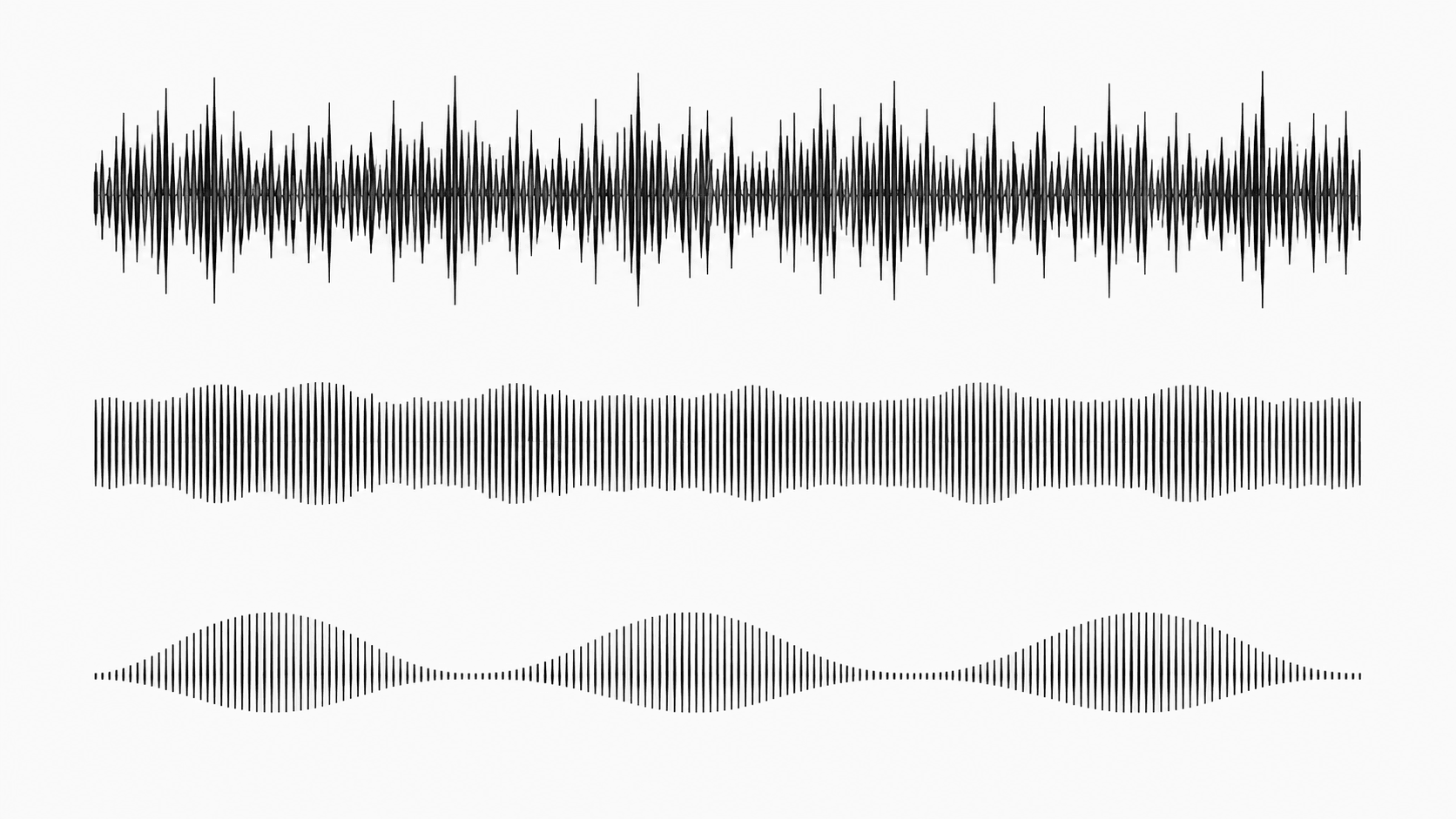
White noise has equal energy at every frequency. That sounds fair until you remember that each octave up the scale covers twice as many frequencies as the one below it. The octave from 5,000 to 10,000 Hz holds ten times the energy of the octave from 500 to 1,000 Hz. So white noise piles most of its power exactly where human hearing is sharpest. Hence the hiss.
Pink noise rolls the high end off by 3 decibels per octave, which works out to equal energy per octave rather than per frequency. Your ear reads that as balanced. Steady rain, a waterfall heard from a distance, wind through trees: all close to pink. It is the one most people describe as natural without being told what it is.
Brown noise, which TryWorkWell labels Dark, rolls off twice as fast at 6 decibels per octave. Almost all the energy sits low. It is a deep rumble, closer to a distant motorway or the inside of an aircraft, and it is the least fatiguing of the three over a long session.
Match the noise to what is bothering you
This is the part that gets skipped. Masking works when the sound you add covers the same frequency range as the sound you want gone. Picking by preference alone is why people conclude that noise does not work for them.
| The problem | What to use | Why |
|---|---|---|
| Keyboards, doors, dishes, sharp intermittent clatter | White | The offending sounds are high and bright, and white has energy to spare up there. |
| Conversation, a nearby call, a TV in another room | Pink | Speech lives roughly between 300 and 3,000 Hz. Pink covers that band without shrieking. |
| Traffic, air conditioning, footsteps upstairs, building hum | Brown or dark | Low rumble needs low energy to cover it. Pink and white barely touch it. |
| Nothing specific, the room is just too quiet | Pink at low volume | It gives the ear something to settle on without asking it to work. |
Speech is the real enemy
Of everything that can happen around a desk, intelligible speech is the most reliably disruptive. It does not have to be loud and it does not have to be about you. Language you can understand competes for the same machinery you are using to write, read or think in words, which is why a whispered phone call two metres away wrecks concentration in a way that a loud fan never does.
That reframes the whole exercise. The goal is not to drown speech out. It is to make it unintelligible. Once you cannot pick out words, the interference largely goes with them, and you can do that at a far lower volume than you would need to actually cover a voice.
The same logic applies to music. Lyrics are speech. If you are writing or reading, anything with words in it is competing with you, however much you like the track.
The volume mistake
Almost everyone runs it too loud. The instinct is to raise the level until the distraction disappears completely, and at that point you have replaced one intrusion with a louder one, plus several hours of unnecessary exposure.
A volume that actually works
- Set it so speech nearby becomes a texture, not words. That is the whole job.
- You should still hear someone say your name from across the room. If you cannot, it is too loud.
- If you notice it while working, turn it down. Noise that fades from awareness is doing its job.
- Over a full day, quieter and constant beats loud and occasional.
Being honest about the evidence
Background noise is not a proven productivity tool. The research is genuinely mixed, and some of it points in opposite directions depending on who is being tested. There is a repeated finding that people with weaker baseline attention, including in studies of children with ADHD, perform better with moderate background noise, while people who already concentrate easily do slightly worse with it. If that is real, then noise is a compensatory tool rather than a universal upgrade.
What is much better established is the negative case: unpredictable, intelligible sound damages concentration. Masking that is a defensible reason to run noise. Expecting it to make you sharper than silence in a quiet room is not.
If you work in genuine quiet and adding noise feels like it helps, that is worth trusting for yourself. Just do not assume it generalises to everyone on your team.
Headphones or speakers
Speakers fill a room, which means the masking noise and the sound you are hiding both reach you through the air and stay in proportion. That works well at home and is useless in an office, where you would simply be adding to everyone else's problem.
Over-ear headphones block some sound physically before any masking happens, so you can run the noise quieter. Noise-cancelling models handle steady low rumble extremely well, which is exactly the range brown noise also covers, so pairing the two is often redundant. Cancelling does almost nothing for speech, which is the sound that actually matters, so headphones plus pink noise is the combination that solves the real problem.
Comfort decides whether any of this survives past week one. A headset that hurts after ninety minutes will be abandoned no matter how well it works.
When silence is the right answer
If your room is already quiet, adding noise is not automatically an upgrade. It has a cost: it is one more thing your ears are processing, and for people who concentrate easily it can be a mild handicap rather than a help.
Two cases where reaching for it is a mistake. When you are stuck on something genuinely hard, adding input is rarely what unsticks you. And when you have had it on for six hours straight, the fatigue you are feeling at four in the afternoon may be partly the noise itself. Take it off for an hour and see.
Find yours in ten minutes
- 1Pick a real task you were about to do anyway. Testing on nothing tells you nothing.
- 2Start with pink at a volume that feels slightly too quiet.
- 3Work for ten minutes. Do not evaluate it during. Ask afterwards whether you thought about the sound at all.
- 4If specific sharp sounds still cut through, switch to white. If a low hum is still there underneath, switch to brown or dark.
- 5Once one works, stop experimenting. Changing the sound every day is its own distraction.
TryWorkWell ships these three and nothing else. No rain on a tent, no cafe ambience, no fireplace. Those recordings loop, and once you have heard the loop you cannot unhear it, which turns the background into a foreground. Three clean generated colours cover the actual problem, and one of them is almost certainly the one your room needs.