Four breathing patterns you can run without anyone noticing
No mat, no closed eyes, no leaving the room. Each one does something different, and picking the wrong one before a meeting will make you sleepy instead of steady.
Breathing is the only part of your autonomic nervous system you can operate on purpose. Your heart rate, your blood pressure and your pupils are not taking requests. Your breath is, and because breathing is wired into the same brainstem circuits that set your arousal level, changing the pattern changes the state.
That is the real mechanism, and it is worth stating plainly because the topic attracts a lot of nonsense. The effects are real, measurable and modest. Breathing will not fix a job you hate or a deadline that was never achievable. It is a reset button between tasks, and it works fast enough to be worth knowing.
Why the exhale is the part that matters
Your heart speeds up slightly as you breathe in and slows as you breathe out. You can feel it if you sit quietly with a finger on your pulse. That coupling is why every calming pattern ever devised makes the exhale longer than the inhale, and why any pattern that emphasises the inhale is stimulating instead.
So the rule underneath all four patterns below is short: longer out than in calms you down, longer in than out wakes you up, equal keeps you level. If you remember nothing else, that is enough to improvise.
1. The physiological sigh, for a spike of stress
Two inhales through the nose, the second one short and sharp on top of the first, then a long slow exhale through the mouth. One to three rounds. It takes about fifteen seconds.
You already do this involuntarily, a couple of times an hour and after crying. The double inhale reopens collapsed air sacs in the lungs, and the long exhale clears carbon dioxide efficiently. A controlled trial at Stanford in 2023 compared five minutes a day of this against mindfulness meditation and two other breathing patterns, and the sighing group came out ahead on mood and on reduced breathing rate. One study is one study, but the mechanism is well understood and the cost of trying it is fifteen seconds.
Use it when something has just landed badly. A message, a bug, a call that went sideways. It is the fastest of the four and the least visible.
2. Box breathing, before something you are dreading
In for four, hold for four, out for four, hold for four. Repeat for two to four minutes. Count at a comfortable pace rather than exact seconds.
The symmetry is the point. It does not sedate you, it steadies you, which is why it is standard practice for people who need to stay calm and alert at the same time. Use it in the two minutes before a difficult conversation, a presentation, or the task you have been avoiding since Tuesday.
If the holds feel like a struggle, shorten every count to three. Straining defeats the purpose.
3. Coherent breathing, for a real reset
Roughly five and a half seconds in, five and a half seconds out, no holds, through the nose. That works out near six breaths a minute against the twelve to sixteen most people run at rest.
This is the pattern with the strongest research behind it, because at around six breaths a minute the rhythm of your breath lines up with a natural oscillation in your blood pressure control, and heart rate variability rises sharply. Five minutes is a genuine reset. It is the one to use between two blocks of work, or when you have been keyed up for an hour without noticing.
Six breaths a minute is a population average, not a rule. Some people resonate closer to five, some closer to six and a half. If a slightly longer or shorter cycle feels easier, use that one.
4. The 4-7-8, for the end of the day
In through the nose for four, hold for seven, out through the mouth for eight. Four rounds is plenty.
The exhale is twice the inhale and the hold is long, which makes it the most sedating of the four. That is exactly why it is the wrong choice at 2pm. Save it for winding down after work or for getting back to sleep, and do not attempt it standing up the first few times.
Which one, when
| Pattern | Time | Use it when |
|---|---|---|
| Physiological sigh | 15 seconds | Something just went wrong and you can feel it in your chest. |
| Box, 4-4-4-4 | 2 to 4 minutes | You are about to do something that makes you nervous. |
| Coherent, 5.5 in and out | 5 minutes | Switching between blocks of work, or resetting a tense hour. |
| 4-7-8 | 1 to 2 minutes | Finishing for the day, or awake at 3am. |
The mistakes that make it not work
- Breathing too big. Deep does not mean maximum. Forcing large volumes for several minutes can leave you light-headed, which is over-breathing, not relaxation.
- Lifting the shoulders. If your shoulders rise on every inhale you are using the wrong muscles. The movement should be lower, around the belly and the lower ribs.
- Mouth breathing by default. Nose in for everything except where a pattern specifically calls for a mouth exhale.
- Quitting at thirty seconds. The sigh works almost instantly. The other three need a couple of minutes before anything shifts.
- Expecting it to fix the cause. It changes how you feel about the next hour, not what is in it.
Getting it to actually happen
The problem with breathing exercises is not difficulty, it is that you never remember. Nobody has ever thought, at the exact moment of getting wound up, that this would be a good time for five minutes of paced breathing. The state that would benefit is the state that stops you noticing.
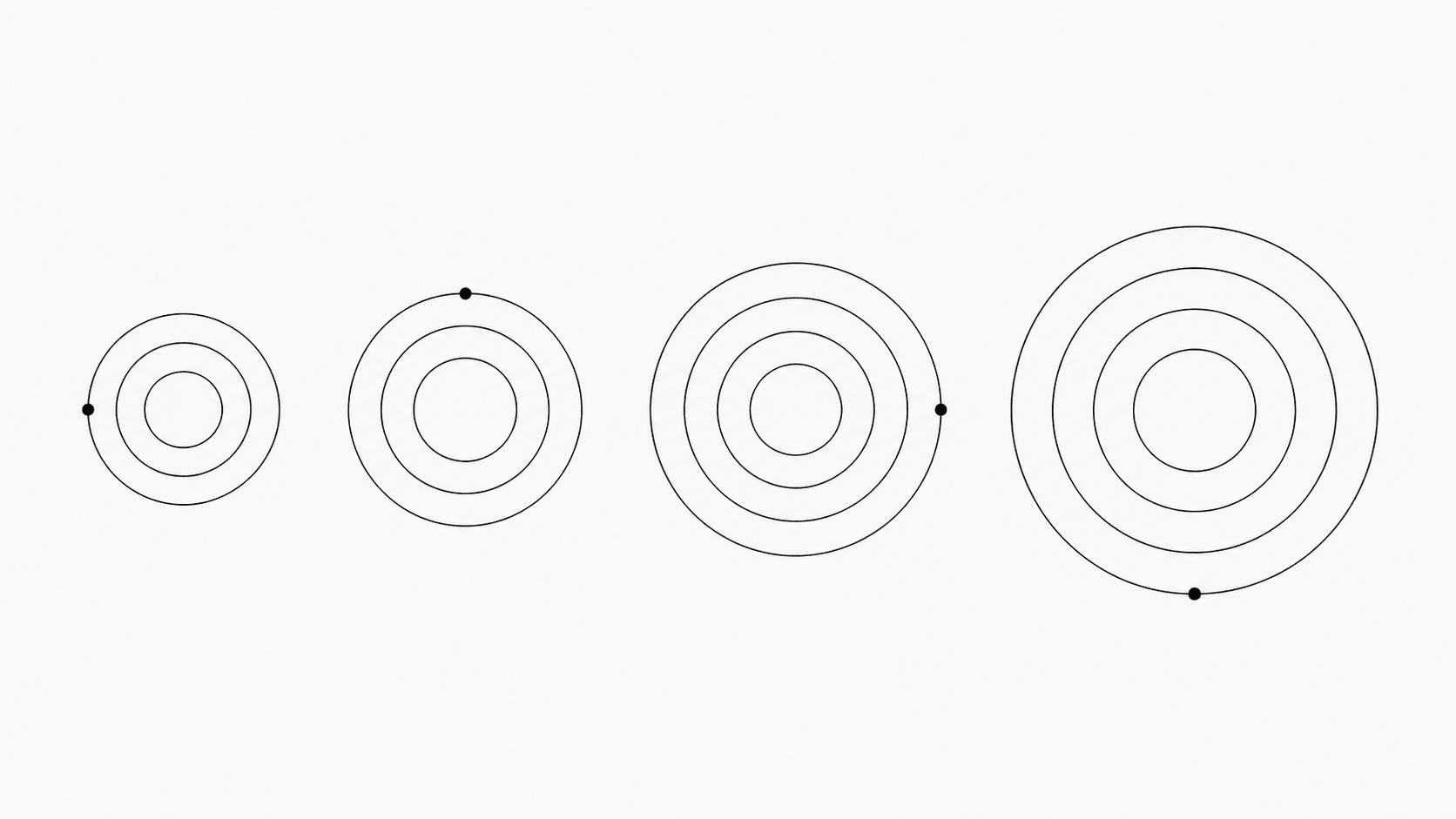
So attach it to something that happens anyway. The end of a focus block. The gap between two meetings. TryWorkWell has a guided breathing exercise sitting one click from the dashboard for that reason, timed rather than counted, so you can follow a moving ring instead of holding numbers in your head while the rest of you is still thinking about work.