10,000 steps was a brand name
It came from a Japanese pedometer sold in 1965, not from a study. The research since has landed somewhere lower, and somewhere more useful if you sit all day.
Your watch wants 10,000. Your phone wants 10,000. Every workplace challenge wants 10,000, and hitting it produces a small ceremonial buzz on your wrist.
The number has no clinical origin at all. It was chosen to sell a device, and it has survived sixty years because it is round, memorable and just difficult enough to feel like an achievement.
Where it came from
In 1965, a Japanese company launched a pedometer called the manpo-kei, which translates roughly as ten thousand step meter. It was timed to ride the fitness interest around the Tokyo Olympics. The name was the marketing.
There was no trial behind it, no dose-response curve, no committee. The character for ten thousand also happens to look a little like a walking person, which did not hurt. Sixty years later it is baked into consumer hardware that hundreds of millions of people check every day.
What the research actually found
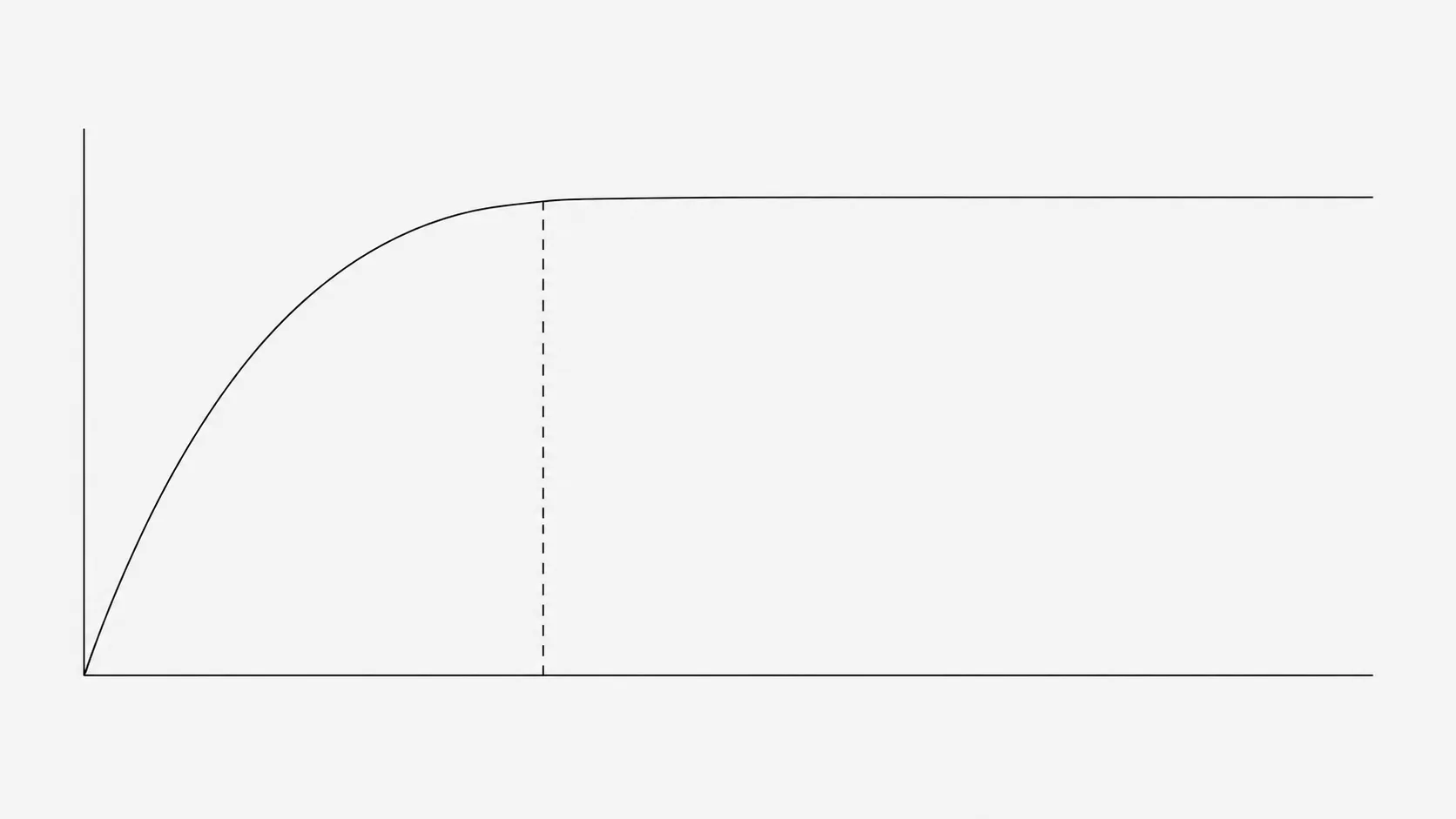
Once people started measuring properly, a consistent shape appeared, and it is not a straight line. Benefit rises steeply from very low step counts, then flattens.
- The steepest gains are at the bottom. Going from around 2,000 to 4,000 or 5,000 steps a day is associated with a large drop in mortality risk. That is the part of the curve most desk workers are actually on.
- It flattens earlier than 10,000. Pooled analyses put the plateau somewhere around 6,000 to 8,000 steps a day for older adults, and roughly 8,000 to 10,000 for people under 60.
- Beyond the plateau, more is not harmful, just not obviously better. Walk 14,000 a day if you enjoy it. Do not treat 9,400 as a failure.
- Intensity adds something, but less than the total. Cadence has a modest independent effect. Getting the total up matters more than getting it brisk.
Almost all of this is observational, which means it shows association rather than proof, and people who walk more differ in other ways. The shape of the curve is consistent enough across studies to be worth acting on. The precision of any single number is not.
Why this matters more if you sit for work
A desk job does not put you at 9,000 steps and short of a target. It puts you somewhere between 2,000 and 4,000, which is the exact stretch of the curve where each extra thousand is worth the most.
That is genuinely good news and it is the opposite of how the number is usually experienced. The gap between you and a meaningful improvement is far smaller than the gap between you and 10,000.
| A typical day | Roughly what it comes to |
|---|---|
| Desk, car, sofa, no deliberate walking | 2,000 to 3,000 |
| The same day plus one twenty minute walk | 4,500 to 5,500 |
| Adding a walk to lunch and one at the end of the day | 6,500 to 8,000 |
| Any of the above plus a dog | You already knew this |
Two twenty minute walks is not a training programme. It is the difference between the bottom of the curve and the flat part of it.
Steps are not the same as breaking up sitting
This is where step counts mislead desk workers most. You can hit a respectable total with one long evening walk and still have spent nine hours essentially motionless, and the evidence suggests those are two separate things.
Prolonged uninterrupted sitting has its own associations with metabolic markers, independent of how much total activity you do. Short frequent interruptions appear to matter in their own right, which is why guidance increasingly says break up sitting and meet an activity total, rather than treating one as payment for the other.
For anything you feel at a desk, the frequent interruptions are also the part that changes how your back and neck feel at five o'clock. A step counter cannot see that at all.
What to do with the number
In order of how much they matter
- Find your current average before setting any target. A week of ordinary days tells you where you are on the curve. Most desk workers are lower than they expect.
- Add 1,500 to 2,000 to whatever that is. That is roughly one twenty minute walk and it is where the return is largest.
- Put the walk somewhere it survives a bad week. Attached to lunch, or to the end of work, beats one that depends on a free evening.
- Count breaking up sitting separately. Standing up every twenty to thirty minutes is a different intervention and neither one substitutes for the other.
- Ignore the ring closing. If a device makes you feel a failure at 9,000, change the goal to something you will actually clear.
When the number is worth ignoring entirely
Wheelchair users, people with painful joints, and anyone recovering from injury are being measured against a metric that was invented to sell pedometers and never described them. Time spent moving, or a rating of how hard it felt, is more honest and more useful.
New breathlessness on mild exertion, chest tightness when you walk, calf pain in one leg only, or dizziness on standing are worth a doctor rather than a step target.
The short version
Ten thousand is a product name from 1965 that outlived the product. The real curve rises fastest at the bottom and flattens around 7,000 or 8,000, and a desk job leaves you near the bottom, which means one twenty minute walk buys you more than most people's entire step-chasing effort. Then break up the sitting separately, because a good total does not undo nine still hours.